> ## Documentation Index
> Fetch the complete documentation index at: https://docs.ale.run/llms.txt
> Use this file to discover all available pages before exploring further.
# Vanilla app
> Guide for deploying generic Python applications.
***
## Prerequisites
| Django Version | Supported Python Version |
| -------------- | -------------------------- |
| Django 3.1 | 3.6, 3.7, 3.8, 3.9 |
| Django 3.2 | 3.6, 3.7, 3.8, 3.9, 3.10 |
| Django 4.0 | 3.8, 3.9, 3.10 |
| Django 4.1 | 3.8, 3.9, 3.10, 3.11 |
| Django 4.2 | 3.8, 3.9, 3.10, 3.11, 3.12 |
| Django 5.0 | 3.10, 3.11, 3.12 |
| Django 5.1 | 3.10, 3.11, 3.12 |
Ensure the Python version specified in your project configuration files (e.g., requirements.txt) matches the version selected during deployment. A mismatch may cause build and runtime errors.
## Select Template and Repository
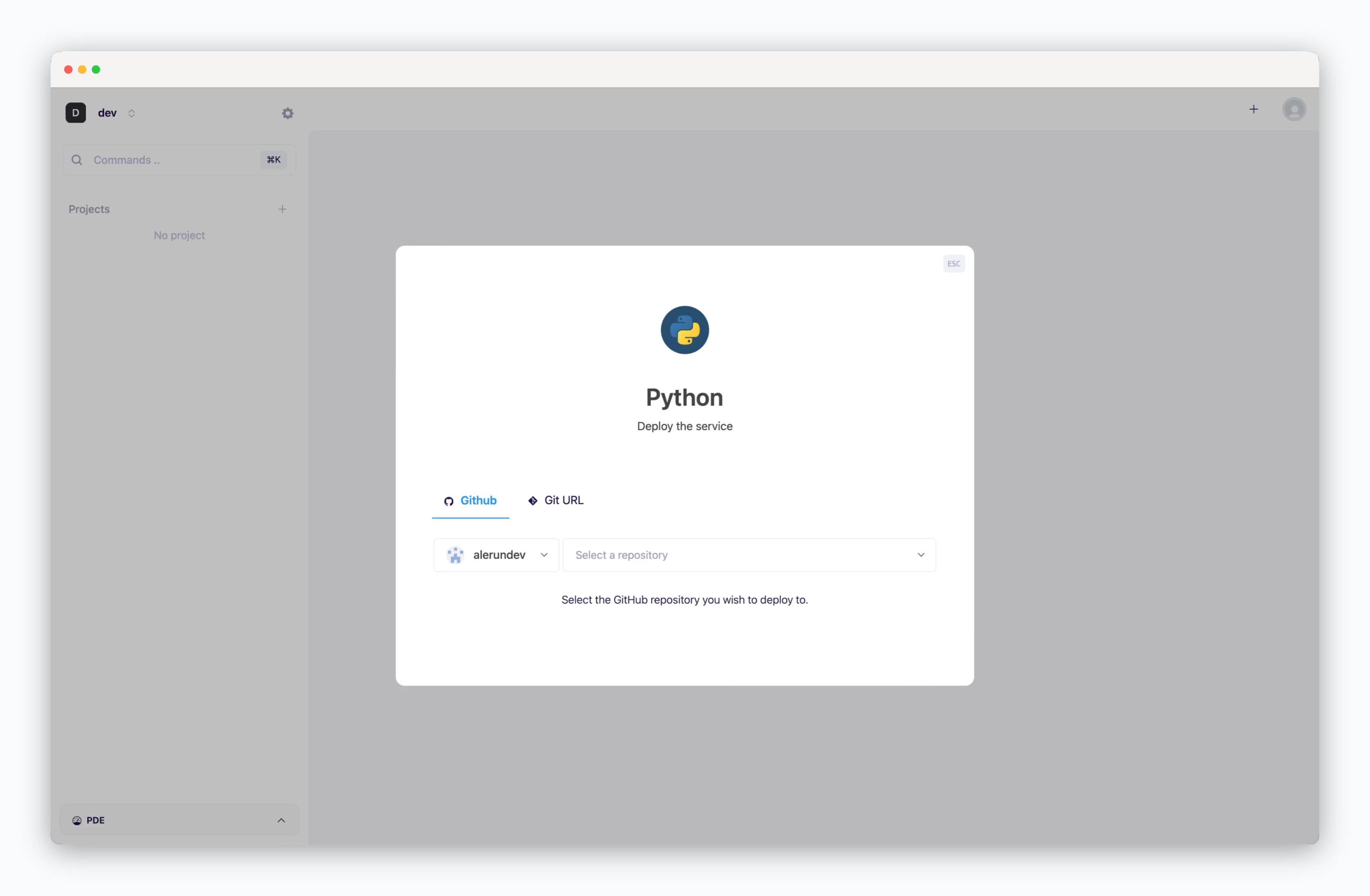 > On the dashboard, click or `⌘ + K` to open the deployment modal and select the **Python** template. Then choose a GitHub repository from the dropdown or [input a Git repository URL in the Git URL tab](/en/developers/private-repo).
For Django projects, ensure to set `ALLOWED_HOSTS` and `CSRF_TRUSTED_ORIGINS` appropriately in `settings.py` for proper page loading.
## Deployment Settings
> Apply the following settings to ensure your service runs seamlessly.
* **Version**
* [Environment Variables](/en/developers/env)
* **Port Number**: `8000` (default)
* **Start Command**: `python3 manage.py runserver 0:8000` (default)
* [Health Check](/en/developers/zero-downtime-deployment): Endpoint for verifying container status
* **Build Variables**: Variables to include during container image builds
* **Embedded node.js**: Node.js version required for builds within the project
* **Install Command**: Python package installation command
* **Pre-start Command**: Commands to execute before the start command
* **Update strategy**
* **Rolling Update**: Deploy new version incrementally while maintaining service availability. Requires sufficient node resources
* **Recreate**: Stop all instances before deploying new version. Results in downtime
By setting environment variables and pre-start commands as follows, you can create a Super User:
```
[Environment Variables]
DJANGO_SUPERUSER_USERNAME - Django superuser username
DJANGO_SUPERUSER_PASSWORD - Django superuser password
DJANGO_SUPERUSER_EMAIL - Django superuser email
[Start Command - Pre Start Command]
python3 manage.py makemigrations && python3 manage.py migrate && python3 manage.py createsuperuser --noinput
```
## Set Resources and Deploy
> On the dashboard, click or `⌘ + K` to open the deployment modal and select the **Python** template. Then choose a GitHub repository from the dropdown or [input a Git repository URL in the Git URL tab](/en/developers/private-repo).
For Django projects, ensure to set `ALLOWED_HOSTS` and `CSRF_TRUSTED_ORIGINS` appropriately in `settings.py` for proper page loading.
## Deployment Settings
> Apply the following settings to ensure your service runs seamlessly.
* **Version**
* [Environment Variables](/en/developers/env)
* **Port Number**: `8000` (default)
* **Start Command**: `python3 manage.py runserver 0:8000` (default)
* [Health Check](/en/developers/zero-downtime-deployment): Endpoint for verifying container status
* **Build Variables**: Variables to include during container image builds
* **Embedded node.js**: Node.js version required for builds within the project
* **Install Command**: Python package installation command
* **Pre-start Command**: Commands to execute before the start command
* **Update strategy**
* **Rolling Update**: Deploy new version incrementally while maintaining service availability. Requires sufficient node resources
* **Recreate**: Stop all instances before deploying new version. Results in downtime
By setting environment variables and pre-start commands as follows, you can create a Super User:
```
[Environment Variables]
DJANGO_SUPERUSER_USERNAME - Django superuser username
DJANGO_SUPERUSER_PASSWORD - Django superuser password
DJANGO_SUPERUSER_EMAIL - Django superuser email
[Start Command - Pre Start Command]
python3 manage.py makemigrations && python3 manage.py migrate && python3 manage.py createsuperuser --noinput
```
## Set Resources and Deploy
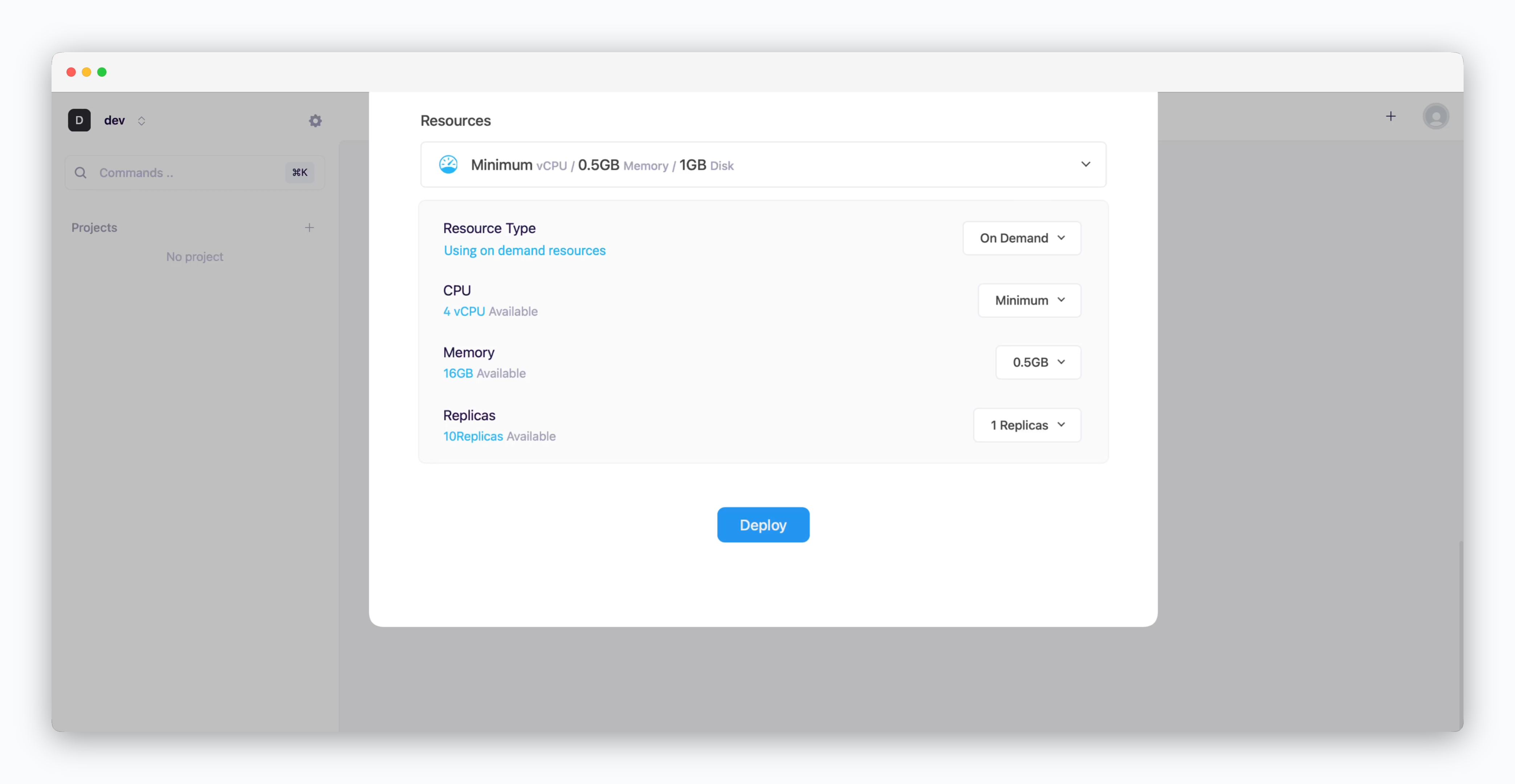 * **Resource Type**: Select between [On-demand or Spot instance types](/en/developers/resource#on-demand-spot)
* **CPU**: Maximum vCPU resource for the service. Minimum vCPU means 0.1 vCPU
* **Memory**: Maximum memory size your service can use
* [Replica](/en/developers/replica): Number of service replicas for high availability and load balancing
* **Deploy**: Click `Deploy`
Once deployment is complete, you can access the web page via the preview domain or send requests using an API tool.
If deployment fails due to resource limitations, see [the Space and Resource Management page](/en/operations/spaces#allocate-resources) to add resources to your space.
***
[Django Docs](https://docs.djangoproject.com/)
* **Resource Type**: Select between [On-demand or Spot instance types](/en/developers/resource#on-demand-spot)
* **CPU**: Maximum vCPU resource for the service. Minimum vCPU means 0.1 vCPU
* **Memory**: Maximum memory size your service can use
* [Replica](/en/developers/replica): Number of service replicas for high availability and load balancing
* **Deploy**: Click `Deploy`
Once deployment is complete, you can access the web page via the preview domain or send requests using an API tool.
If deployment fails due to resource limitations, see [the Space and Resource Management page](/en/operations/spaces#allocate-resources) to add resources to your space.
***
[Django Docs](https://docs.djangoproject.com/)